
Welded joints are permanent and compact, flanged joints are bolted and removable, and a grip type coupling joins plain-end pipe without hot work and can be fitted and replaced quickly. The best choice depends on the system, access, codes and how often the joint may need to be opened.
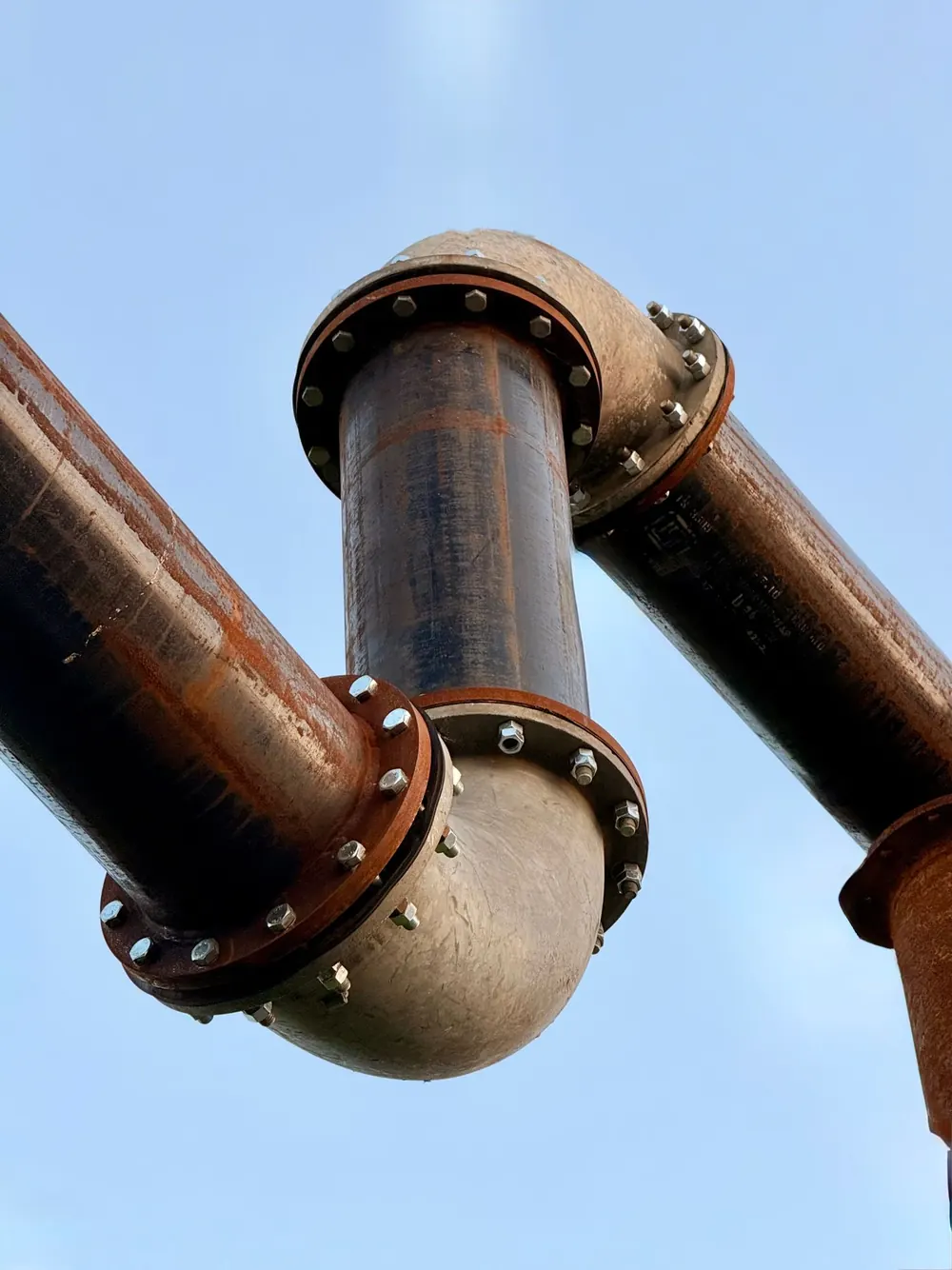 Industrial pipework with bolted flanged joints
The three options
| Welded joint | Flanged joint | Grip type coupling | |
|---|---|---|---|
| Hot work required | Yes | Often, to fit the flanges | No |
| Installation speed | Slower | Moderate | Fast |
| Replacing a section | Cut and re-weld | Unbolt, alignment is critical | Loosen and refit |
| Pipe preparation | Bevel and clean | Flanges fitted to pipe ends | Plain pipe ends |
| Permanence | Permanent | Removable | Removable |
General comparison only. Check pressure, temperature and approvals against the specific model.
When a grip type coupling makes sense
- Hot work is slow, restricted or needs a permit, for example on board a ship or in an operating plant.
- A section may need to be removed for maintenance or replacement.
- Speed of installation matters to the programme.
When a welded or flanged joint may be better
- The joint should be permanent and fully integral with the pipe.
- The system is covered by a code or specification that requires welded or flanged joints.
- Conditions exceed the rating of the available coupling.
What to check
Whichever joint you choose, check the pressure and temperature rating, material compatibility with the medium, alignment and support requirements, and any approval your project requires. For grip type couplings, the manufacturer's datasheet gives these limits for each model.
Get grip type couplings in India
Asaus Technologies supplies grip type couplings from Vadodara. Request a quote with your pipe size, material and quantity.