
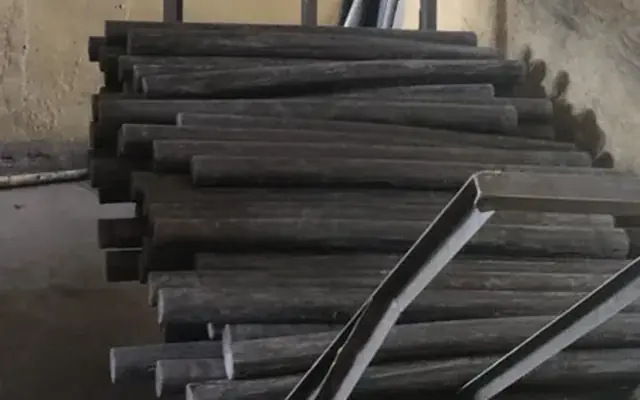
Molybdenum ore is processed to molybdenum oxide, reduced with hydrogen to metal powder, pressed into bars and sintered. The bars are then rolled, drawn or forged into rods, sheets and parts.
Steps
- Roast the ore to molybdenum oxide
- Reduce the oxide with hydrogen to powder
- Press the powder and sinter it
- Work the bar into rod, plate or other forms
Why powder
Molybdenum melts at about 2,623 °C, so powder metallurgy is a practical route. See what molybdenum is used for.
Why powder?
Molybdenum also melts at a very high temperature, about 2,623 °C, so most molybdenum rod, plate and sheet starts as powder that is pressed and sintered rather than cast.
The usual route
- Molybdenite ore is roasted to molybdenum oxide.
- The oxide is reduced with hydrogen to molybdenum metal powder.
- The powder is pressed and sintered into bars or slabs.
- The sintered material is hot-worked into rod, plate or sheet.
Related guides
- What is molybdenum used for: The main uses of molybdenum: steel alloying, furnace parts, heating elements, electrodes and electronics, with melting point,…
- Molybdenum vs tungsten: Molybdenum and tungsten compared on melting point, density, workability, oxidation and cost, with a simple guide to choosing…
- What is metal powder?: Metal powder is metal in fine particle form, made by atomising liquid metal or reducing oxides. See how it is made, used and…
- Powder metallurgy vs casting: Powder metallurgy presses and sinters powder, while casting pours molten metal into a mould. Compare them on material, shape,…
What to send us
- Form (rods, plates, lump) and dimensions
- Purity or grade
- Quantity and delivery timeline
- Specification or test certificate
About molybdenum from Asaus Technologies
Asaus Technologies is an independent supplier based in Vadodara, Gujarat, and supplies molybdenum across India. Molybdenum rods, plates and lump material for high-temperature and alloying use. See the molybdenum page.
Need molybdenum?
Send the form, size and quantity for a quotation. Request a quote.